As AI continues to evolve and new innovations emerge regularly, there is no single framework, such as Agile or Software Development Life Cycle (SDLC), that can be applied universally across all industries.
Still, research across different settings points to a few common habits that work well almost everywhere. Agree on what “done” looks like, based on evidence you can actually see; Be clear about what is included and what isn’t; work in small steps; and decide upfront how you will check the results.
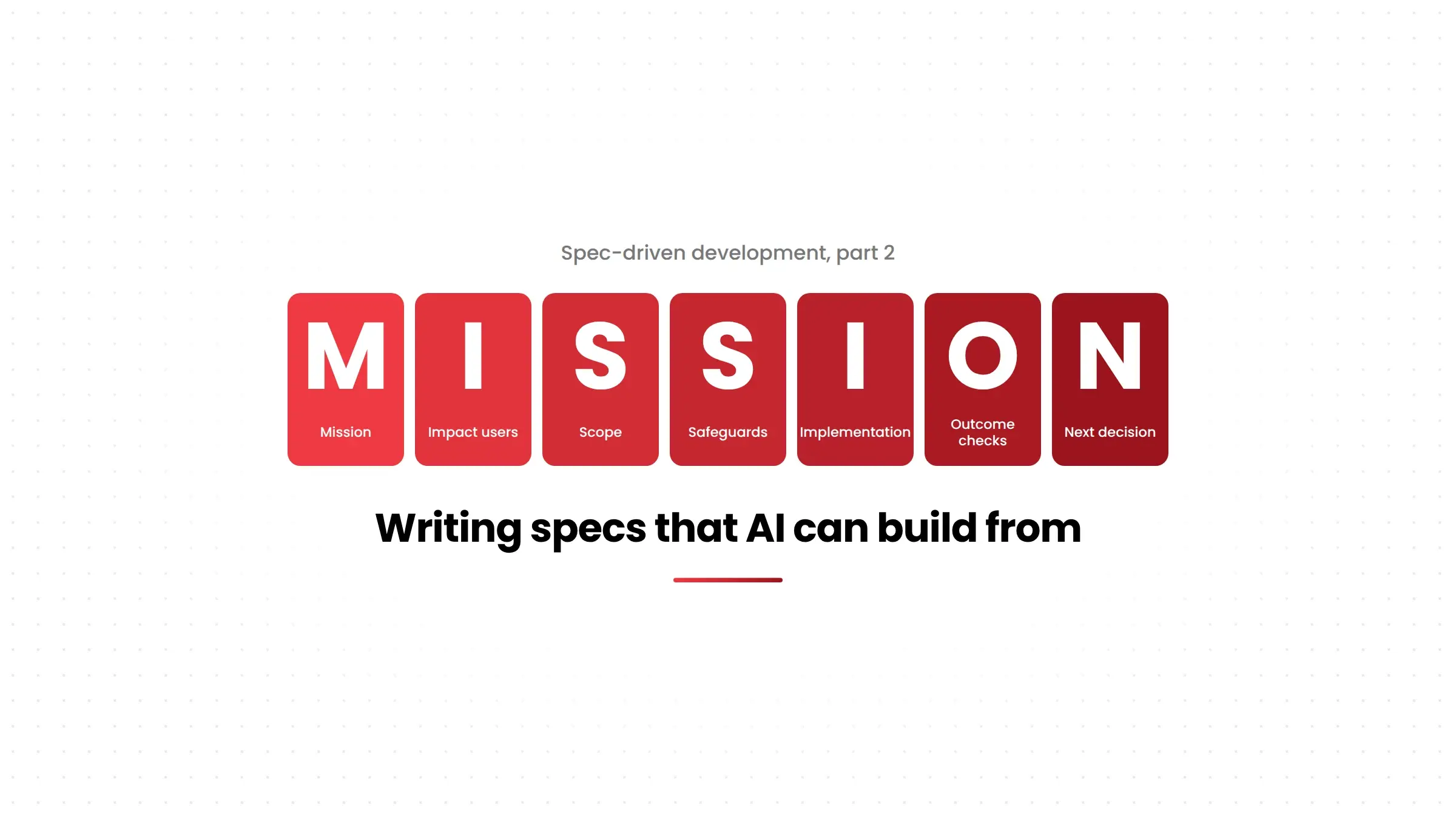
Since it can often be confusing to navigate the many different terms and frameworks, I created a framework called MISSION.

In a non-profit setting, particularly within better.sg’s Volunteer Tech Officer programme, MISSION provides a practical way to translate requirements into clear, implementable specifications while keeping governance, evidence, and human oversight at the centre.

Why the Last 2 Steps Matter Most
MISSION is designed to cover the key steps involved in AI-led development, particularly from a governance perspective. An AI-ready specification should require the agent to provide evidence during the Outcome Checks stage and stop at the Next Decision stage whenever verification fails, data risks are unclear, or human judgement is required.
From a governance standpoint, this approach also aligns with the US National Institute of Standards and Technology (NIST) model, which supports a continuous cycle by treating governance, context, measurement, and risk management as connected activities rather than as a one-time compliance task.
To show how MISSION can be applied in practice, let’s briefly apply it to the following requirement, to “Build a Donor Management Portal.” This is an online system that helps a charity handle donations from start to finish. The full detailed specification is available in the provided GitHub repository.

Notice two things. First, the AI is given clear limits. It never handles card numbers or live passwords, and it cannot make judgement calls on suspicious transactions. Second, accountability ultimately lies with the human. If something looks off, the system gathers evidence and a trained person decides what happens next.
MISSION is not intended to replace any established framework or standard, such as Agile, SDLC, or NIST. Instead, it is a simple way of sharing how specification-driven development can be approached within an organisation. Like any framework, MISSION is only as good as the organisation’s own policies, and having the right people available to provide oversight.
References