Recap of Better.sg's Feb 2026 Pitch & Demo Night
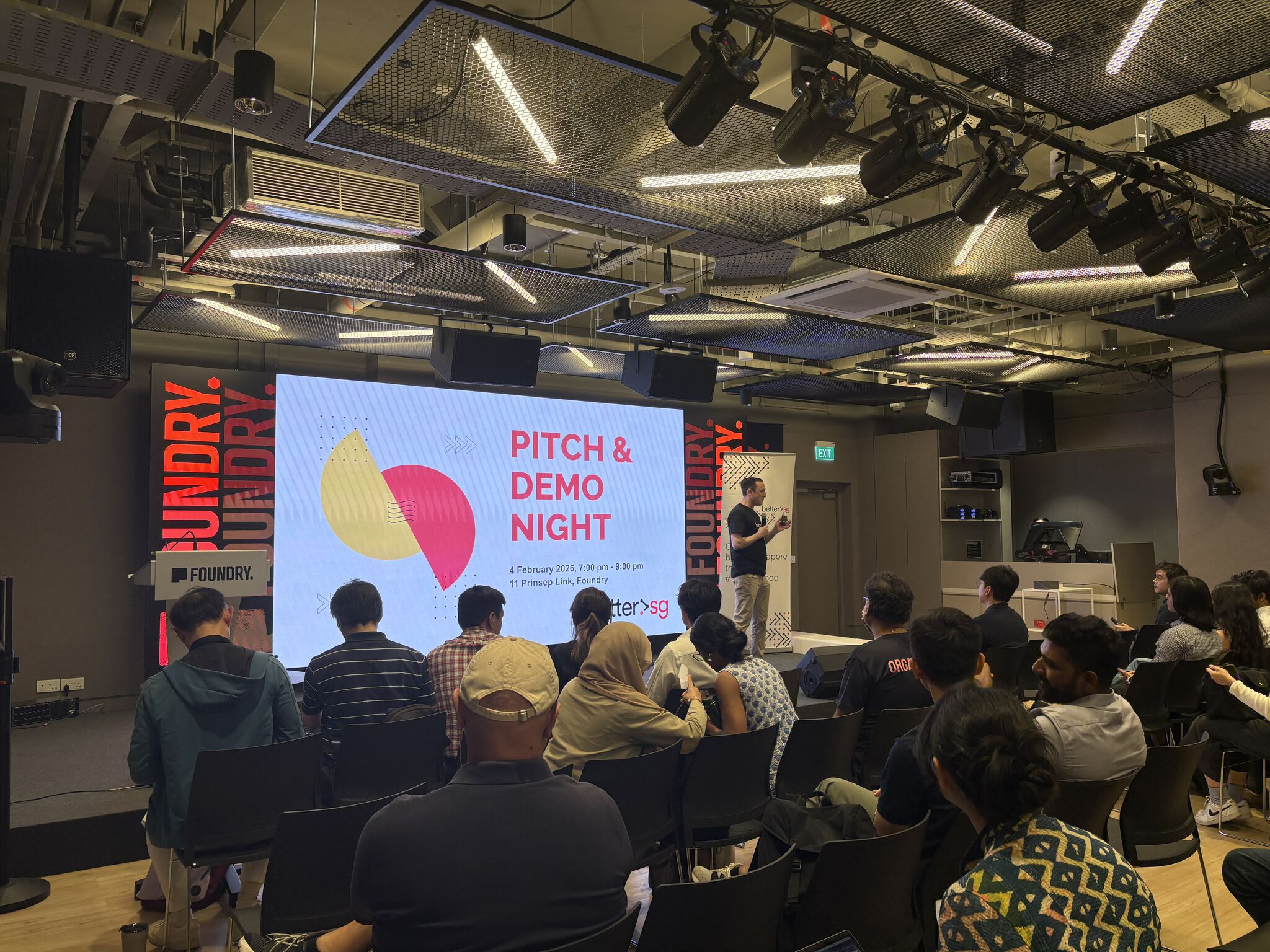
On the evening of 4 Feb 2026, over 100 members of our community gathered at The Foundry for Better.sg's flagship Pitch & Demo Night. Six projects took the stage: four ongoing initiatives sharing updates on real-world impact, and two new pitches seeking collaborators.
Since 2020, Schemes.sg has been quietly building toward something ambitious: a single platform where any Singapore resident can find the social support they need, regardless of where they are in life.
After five years of iteration, the team presented a striking set of numbers. As of 2025, Schemes.sg has 2,469 search queries, 960 chat sessions, and coverage across 480 schemes. The most common seekers were those with low incomes (29.4%), followed by parents and families, the elderly, and youth. What they were mostly searching for: financial aid, mental health support, and employment assistance.
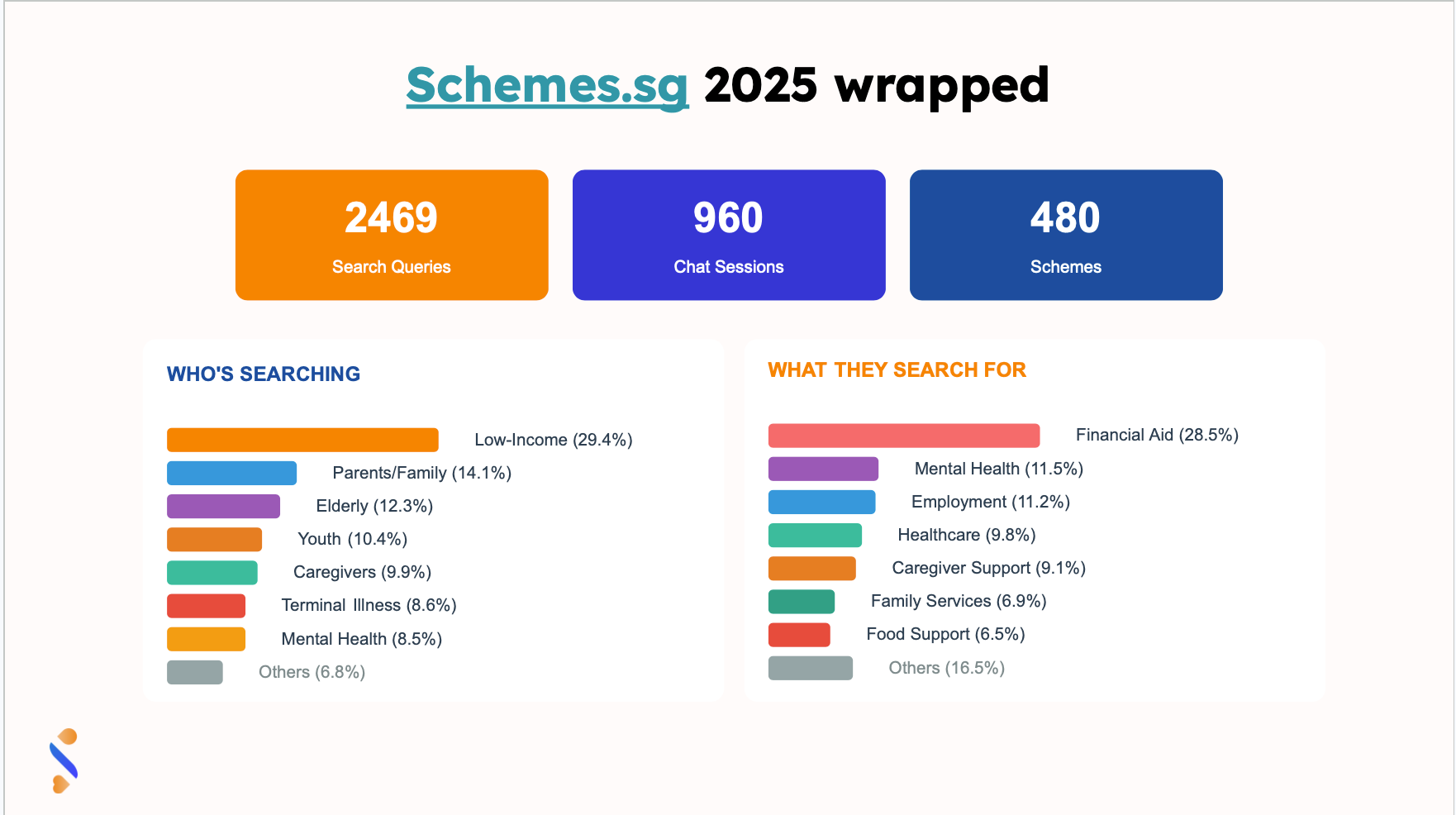
But the most thought-provoking part of the demo was what the data revealed about gaps. By comparing what users searched for against what schemes were actually available, the team identified where demand was outpacing supply: financial assistance (+5.2%), employment and job support (+3.8%), and mental health services (+2.5%). These aren't abstract statistics. They represent real people who searched and may not have found what they needed.
To keep the platform current, the team has also built an AI-assisted pipeline where volunteers can submit new schemes, and an agent validates and enriches the data, with a human in the loop before anything goes live. The team is now calling for contributors to help close the gaps. You can start at schemes.sg/contribute.
Community cats in Singapore face very real dangers. In 2024, the SPCA recorded 961 cases of animal cruelty and welfare issues, a 12-year high, with cats forming the majority of victims. Headlines about cats going missing or being found harmed have become all too familiar.
Catsafe is a ground-up initiative building a lightweight GPS + LTE smart tracker specifically designed for community cats. Unlike consumer options like Apple AirTags, which rely on iPhones, don't support multi-caregiver coordination, and lack tamper alerts, Catsafe is purpose-built for the realities of community cat caregiving.
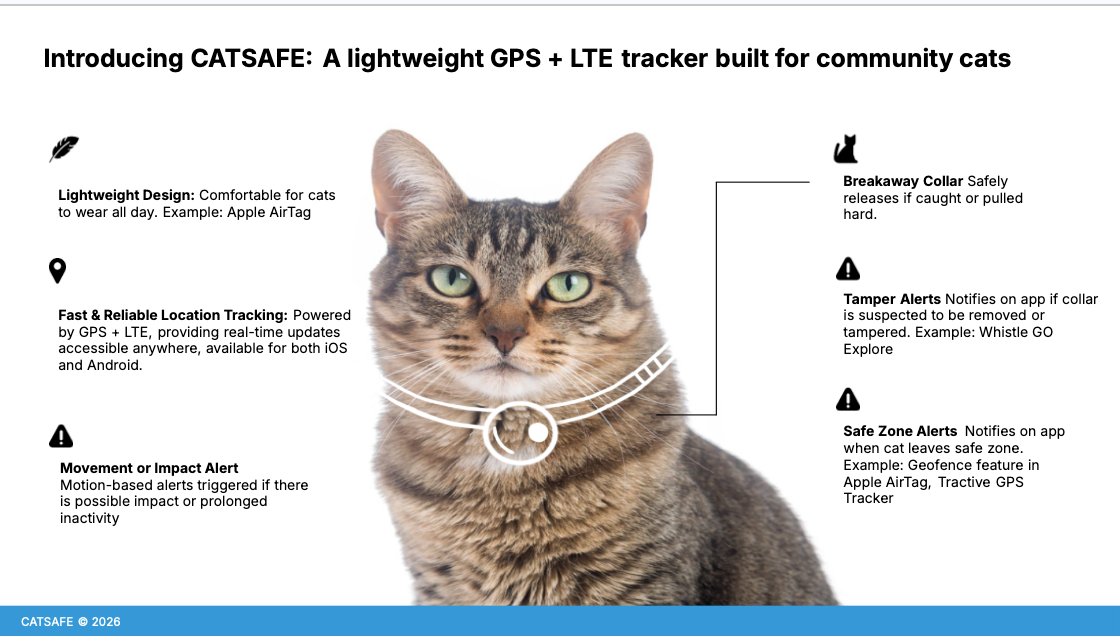
The team has made significant progress: a working Android prototype with live backend data, a first PCB designed and built, and a National Youth Council grant secured. They've also received a letter of support from the Cat Welfare Society and been featured in Straits Times and Mothership. Their goal is to pilot in at least three neighbourhoods by March 2026.
A survey of 40 feeders found that 80% report very high stress when a cat goes missing. Catsafe isn't just a tech product. It is an emotional lifeline for the people who show up every day to care for Singapore's community animals. Follow their progress at @catsafe.sg on Instagram.
For a social service organisation like Starfish Singapore, every hour spent on administrative work is an hour not spent on the children and families they serve. This collaboration set out to change that.
Starfish Singapore runs a multi-stage admissions process for their programmes, one that required sending multiple emails to parents, guardians, and social workers for every single applicant. It was manual, human-intensive, and time-consuming by design, not by choice.
Better.sg volunteers took the time to properly understand the existing workflow before proposing any solutions. Working within Starfish's existing setup (their programme application forms were already hosted on Jotform) the team built an automated workflow that eliminated much of the repetitive back-and-forth.
The result?
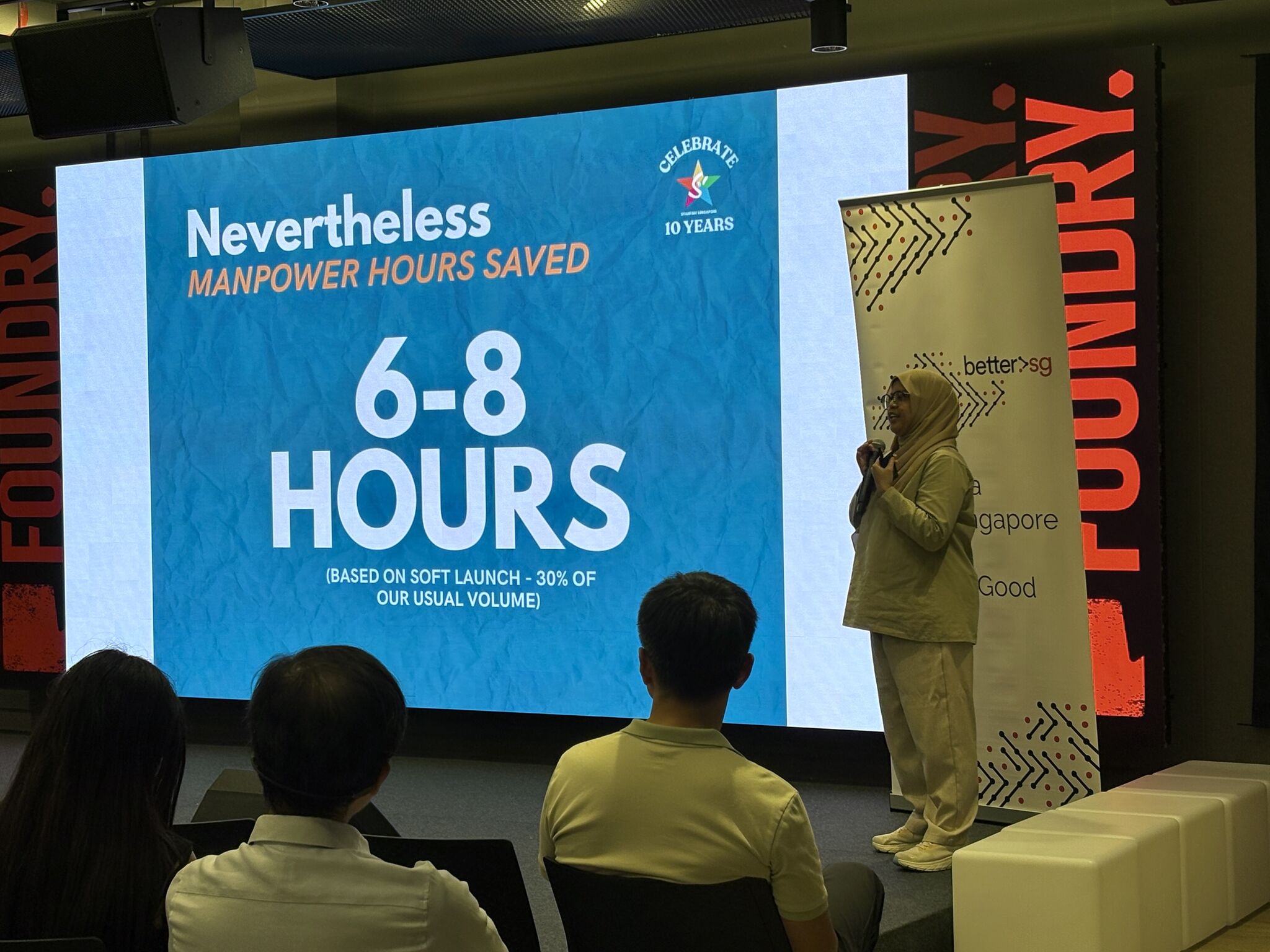
As Starfish Singapore put it: "It's really been a breath of fresh air." It's a good example of what thoughtful tech volunteering looks like: not imposing new systems, but meeting an organisation where they are and making what already exists work much better.
Better.sg volunteers partnered with the Samaritans of Singapore (SOS) to strengthen their data analytics capabilities, starting with the Volunteer Management (VM) team.
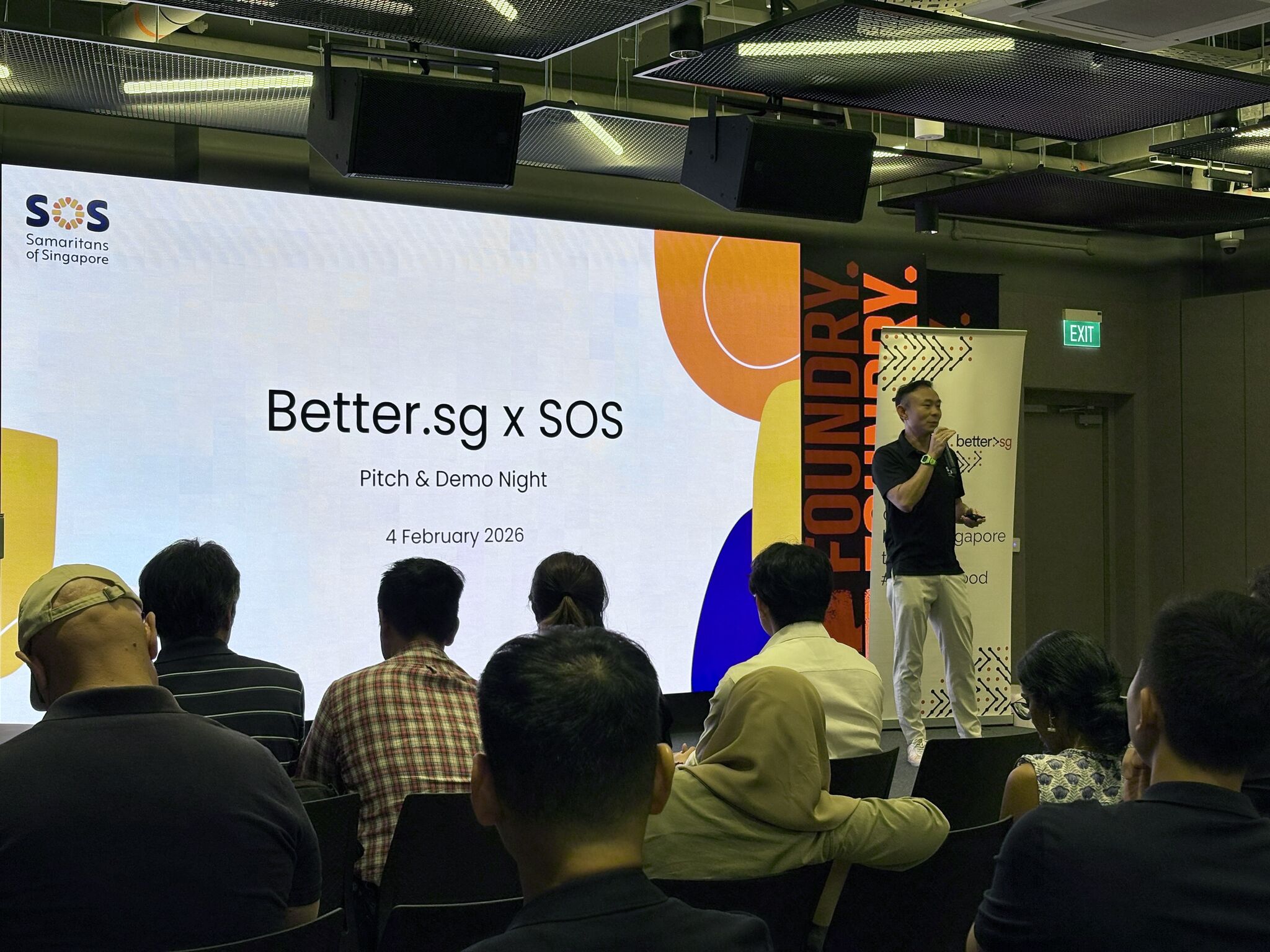
The collaboration produced a Power BI dashboard that gives SOS's rostering team real-time visibility into volunteer activity, leave patterns, shift sign-ups, and demographic trends. Previously, gaining these insights required manually sorting through raw data. Now, the VM team can quickly identify gaps in the volunteer base and take more targeted actions, whether that's scheduling, recruitment, or engagement.
Beyond the dashboard, the team also co-delivered a data workshop for 13 SOS staff across 8 departments. The results were encouraging! 85% of attendees said the workshop met their expectations, and 70% reported improved proficiency in data visualisation. The biggest gains came from participants who started with low or no confidence, a meaningful indicator that capability-building is working where it's needed most.
The first pitch, Presence, aims to safeguard solo-dwellers’ wellbeing. Singapore's proportion of solo households is rising, particularly among those aged 65 and above. But as Kevin pointed out, the problem isn't limited to the elderly. Working adults who live alone are an often-overlooked group. They are also less likely to be part of structured outreach programmes, and whose absence from daily life can go unnoticed until it's too late.
Presence doesn't track location. It doesn't read messages. It doesn't ask for daily manual check-ins. Instead, it quietly learns what a normal day looks like for the user, based on phone usage patterns like screen time and charging behaviour, and only acts when something seems significantly off. If a deviation is detected and the user doesn't respond, a single trusted contact receives a gentle nudge: "Could you check in with [name]?"
The architecture is privacy-first by design, with all computation done locally on the device. The team draws inspiration from the Chinese app "Are You Dead?", which gained rapid adoption globally precisely because it validated a real and underserved fear: the fear of being unseen when something goes wrong.
Presence is looking for a Data/AI/ML engineer, mobile engineer, and UI/UX designer to help build the MVP. If you want to work on something that genuinely matters, reach out.
The second pitch came from Chaitanya Jadhav, the team behind Unmute, a real-time Singapore Sign Language (SgSL) translation platform.
The numbers tell a clear story: there are an estimated 500,000 individuals with hearing loss in Singapore, but only 57 registered SgSL interpreters. Scaling human interpretation to meet everyday communication needs is simply not feasible. Unmute is building toward a technological bridge.
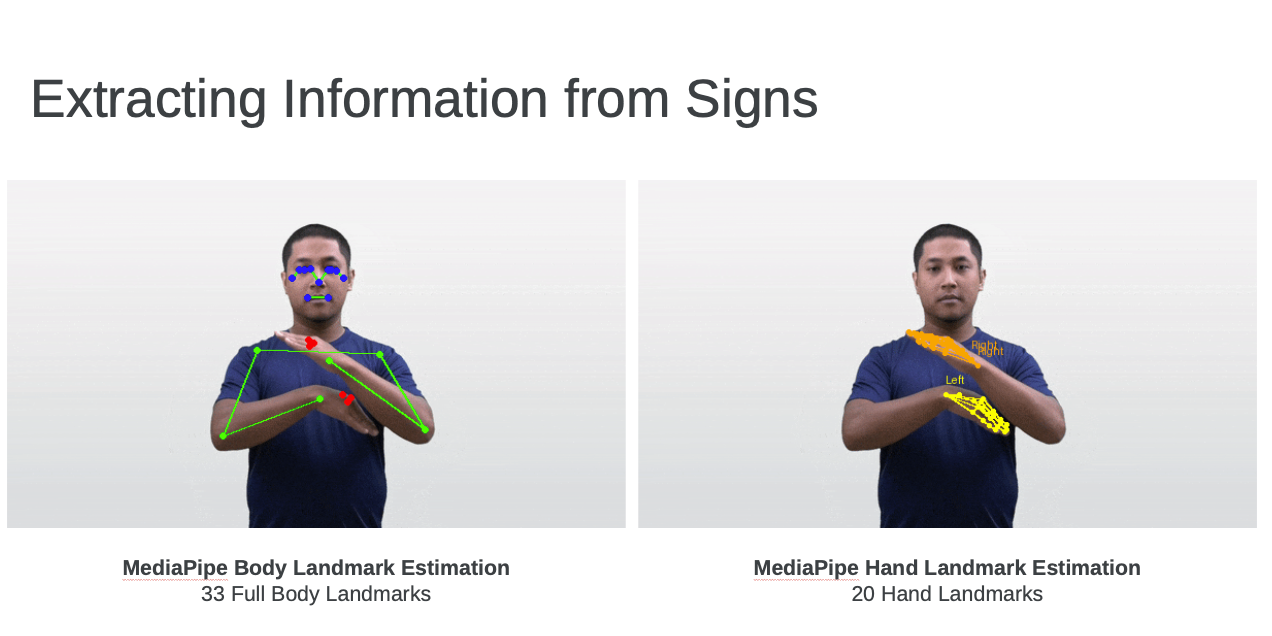
The team has developed a text-to-sign translation pipeline using MediaPipe's body and hand landmark estimation to extract meaningful gesture data from video. Their current proof of concept takes voice or text input and outputs a sequence of SgSL signs. You can try it at unmute-gamma.vercel.app.
The road ahead involves expanding the SgSL dataset, collaborating with Deaf community members and machine learning experts, and building out two-way video conferencing support. Unmute is not just a translation tool. It is an investment in the linguistic identity of Deaf Singaporeans, for whom SgSL is deeply personal.
They’re looking to collaborate with SgSL and Machine Learning experts, and improve the UI/UX of the tool.
What struck many attendees that evening wasn't just the technical sophistication of the projects, but the care embedded in each one.
Every team had done the work to understand the people they were building for, whether that was a low-income family looking for financial aid, a cat carer losing sleep over a missing stray, a social worker struggling to make sense of messy data, or a Deaf Singaporean navigating a world not designed for them. You may check out their full presentations here.
If any of these projects resonate with you, and you wish to support them, kindly write to info@better.sg and we’ll connect you.